Paver vs Concrete Driveways: A Contractor's Guide

Bolster
TLDR:
Pavers win on curb appeal and repairability but cost more and need more upkeep. Concrete wins on upfront price and simplicity but cracks and repairs can look ugly. Match the material to the client’s priorities and site conditions.
Help Clients Choose the Right Driveway Without Regrets
When homeowners ask “pavers or concrete?” they’re usually asking two questions at once: what will look best, and what won’t become a headache in five years. Both options can be excellent when installed correctly. Both can also become problem projects when expectations are wrong or site prep gets rushed.
Your job is to guide the decision based on budget, climate, drainage, usage, and how picky the homeowner is about aesthetics.
Why driveway material matters
A driveway is not just something you park on. It’s a big piece of curb appeal and a big surface area that takes real abuse: vehicles turning, freeze-thaw cycles, sun, water, de-icing salts, and heavy loads like delivery trucks.
The right material can:
- improve curb appeal and perceived home value
- reduce maintenance headaches
- handle drainage better
- last longer with fewer repairs
The wrong material usually costs the homeowner twice. Once to install, then again to fix.
-
Paver driveways
Why homeowners love pavers
Design and curb appeal
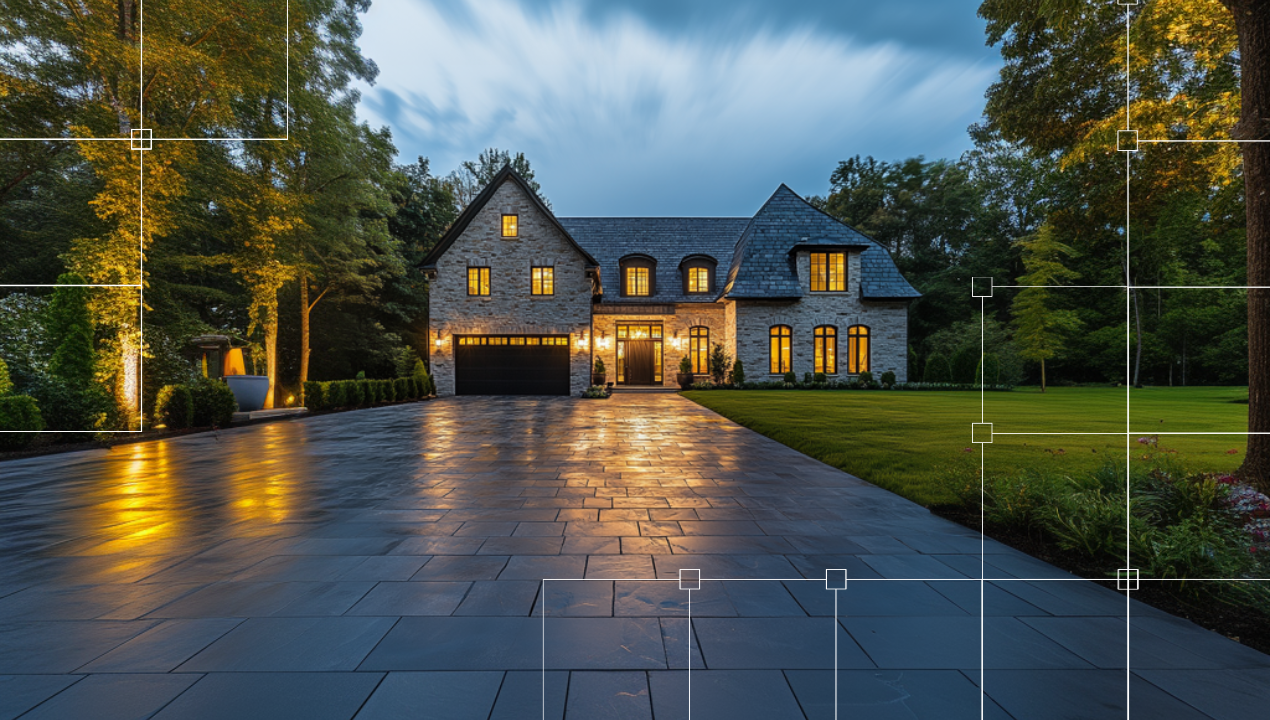
Pavers are the clear winner if the homeowner cares about looks. You can offer patterns, borders, and color blends that make a driveway feel custom instead of cookie-cutter. If a client wants their home to stand out, pavers make that easy.
Repairability
This is the contractor win that’s easy to explain. If something gets damaged or stained, you can replace individual pavers without tearing out the whole driveway. For homeowners who hate the idea of visible patches, this is a strong selling point.
Durability in the real world
Pavers handle movement better because they are modular. If the base is built properly, pavers tolerate freeze-thaw and minor settlement better than a big monolithic slab.
Drainage options
Permeable pavers can reduce runoff and help with drainage issues in areas with heavy rainfall or strict stormwater requirements. Not every driveway needs permeable pavers, but when drainage is a pain point, they are worth discussing.
Paver drawbacks to be honest about
Higher upfront cost
Pavers typically cost more because the labor is higher and the base prep has to be done right. Homeowners need to understand they are paying for appearance and long-term flexibility.
Maintenance and weeds
Pavers can grow weeds between joints if the jointing sand is neglected or if the driveway is shaded and stays damp. Some homeowners are fine with that. Others want “set it and forget it.”
Installation quality matters a lot
Pavers are not forgiving. If base prep is weak, pavers will settle, edges will drift, and the driveway will look rough fast. If you are selling pavers, you are selling your prep and your process, not just the product.
-
Concrete driveways
Why homeowners choose concrete
Lower upfront cost
Concrete is usually the more cost-effective choice for homeowners who want a clean, functional driveway without paying for a premium aesthetic.
Simple maintenance
Concrete is one surface. No joints for weeds. No shifting pavers. A good seal and occasional cleaning goes a long way.
Good durability when installed correctly
A properly installed slab with good base prep, control joints, proper curing, and drainage can last for decades. Concrete handles daily vehicles fine. The issue is not whether concrete can work. It’s whether it gets installed correctly for the site.
Concrete drawbacks to explain upfront
Cracking is normal
Concrete cracks. The goal is to control where it cracks with good joint layout and base prep. But homeowners need to understand cracks can still happen, especially with heavy loads or freeze-thaw.
Repairs can look ugly
Concrete patching usually looks like patching. If the homeowner is very aesthetic-driven, this matters. You can sometimes improve appearance with overlays, but it’s not the same as swapping a few pavers.
Drainage and runoff
Concrete is impermeable. If drainage is already a problem on the property, you need to design around runoff or consider other solutions.
Environmental and site considerations
If a homeowner cares about water management, pavers may be the better conversation, especially permeable systems. If the driveway is steep, shaded, or has known drainage issues, talk about how each surface handles water and ice.
Also consider:
- soil conditions and settlement risk
- freeze-thaw cycles
- de-icing salt use
- heavy vehicle access
- tree roots near the driveway
- HOA restrictions on appearance
The best driveway recommendation is not just “pavers are nicer” or “concrete is cheaper.” It’s “this is what fits your site and how you live.”
How to recommend the right option to the right client
Recommend pavers when
- the homeowner is aesthetics-driven
- they want a high-end look that matches the house
- they care about repairability and long-term flexibility
- drainage is a concern and permeable options are attractive
- they are willing to maintain joints and seal when needed
Recommend concrete when
- budget and simplicity matter most
- they want low maintenance
- they understand cracking is possible
- drainage can be managed with slope and design
- they want a clean, straightforward solution
How Bolster helps you win driveway jobs
Driveway projects can look simple but swing wildly in cost based on base prep, demolition, drainage, and finish details. You win more jobs and avoid margin hits when your estimates are structured and your scope is clear.
Bolster helps you:
- build cleaner estimates with consistent scope and allowances
- present options clearly, standard concrete vs stamped, pavers vs permeable
- document inclusions and exclusions so you avoid surprise arguments
Start here: Construction Estimating Software.
If you want to show clients a more professional end-to-end experience, here’s the platform overview: Bolster.
Summary
Pavers and concrete both work when installed right. Pavers are the premium choice for design, repairability, and flexibility, but cost more and require more maintenance. Concrete is the practical choice for budget and simplicity, but cracking and repair appearance are real tradeoffs.
Your best recommendation is the one that matches the homeowner’s priorities and the site’s realities. When you estimate cleanly and set expectations early, either driveway option can be a win for your client and your margin.